AI-First Software Delivery: Balancing Innovation with Proven Practices

Summary

Disclaimer: This summary has been generated by AI. It is experimental, and feedback is welcomed. Please reach out to info@qcon.ai with any comments or concerns.

The presentation "AI-First Software Delivery: Balancing Innovation with Proven Practices" by Wes Reisz discusses the integration of AI within the software development lifecycle (SDLC) while maintaining control and adhering to engineering principles.

Key Points:

  • The focus is on adopting AI-first practices, particularly using coding agents, in a way that keeps developers in control.
  • There is an emphasis on meeting clients and teams where they are, understanding their domain knowledge, and tailoring the approach accordingly.
  • The use of a structured model called RIPER-5 is discussed. This model helps guide specification-driven AI development through five phases: Research, Innovate, Plan, Execute, and Review.
  • The integration of AI in software delivery should amplify existing engineering practices. A solid foundation is crucial as AI will amplify both good and bad practices.
  • The approach includes practices like pair programming and continuous delivery, ensuring AI is used effectively to support these workflows.
  • Reisz talks about choosing approaches based on code longevity and automated verification, stressing that AI does not replace engineering discipline.
  • A key takeaway is that while AI can drive innovation, it is crucial to maintain human oversight to ensure quality and relevance in delivery.

This session demonstrates merging AI's potential with established software practices to enable reliable, innovation-driven workflows that provide real value to teams and organizations.

This is the end of the AI-generated content.


As AI reshapes the work of software teams and brings both opportunities and uncertainties, ensuring high-quality delivery becomes even more essential. This session shows how to adopt AI-first practices while keeping developers in control and aligned with the engineering principles that support effective delivery. Using real examples based on the RIPER-5 model, a specification-driven design approach, the talk demonstrates how to merge the potential of AI with already established practices to create balanced, reliable and developer-centered workflows. Participants will walk away with a practical roadmap to cut through the hype, maintain human oversight and integrate AI in ways that deliver real value.


Speaker
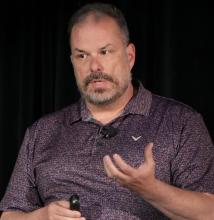
Wes Reisz

Technical Principal @Thoughtworks, 16-Time QCon Chair, & Creator of The InfoQ Podcast

With over 20 years of delivering and architecting sociotechnical systems, Wesley Reisz has led the technical delivery of multi-million dollar software projects, chaired numerous software conferences across North America (and the United Kingdom), created a highly respected podcast, and spent over a decade teaching 400-level software architecture/programming courses as an adjunct professor. These experiences have given him deep expertise in software architecture, cloud-native engineering, team topologies, and platform thinking (alongside a broad knowledge of different software domains).

Wes is a Technical Principal at Thoughtworks, where he specializes in reducing complexity in software through systems thinking, application modernization, platform engineering, and AI-First Software Delivery. Embodying the concept of a T-shaped engineer (blending broad expertise across a wide range of software domains with deep technical knowledge of the cloud-native ecosystem), Wes strongly believes in the transformative power of sharing knowledge through speaking, teaching, and continuous learning.

You can reach Wes via:

Read more
Find Wes Reisz at:

Date

Tuesday Dec 16 / 04:50PM EST ( 50 minutes )

Location

Library Reading Room, 3rd Flr

Share